

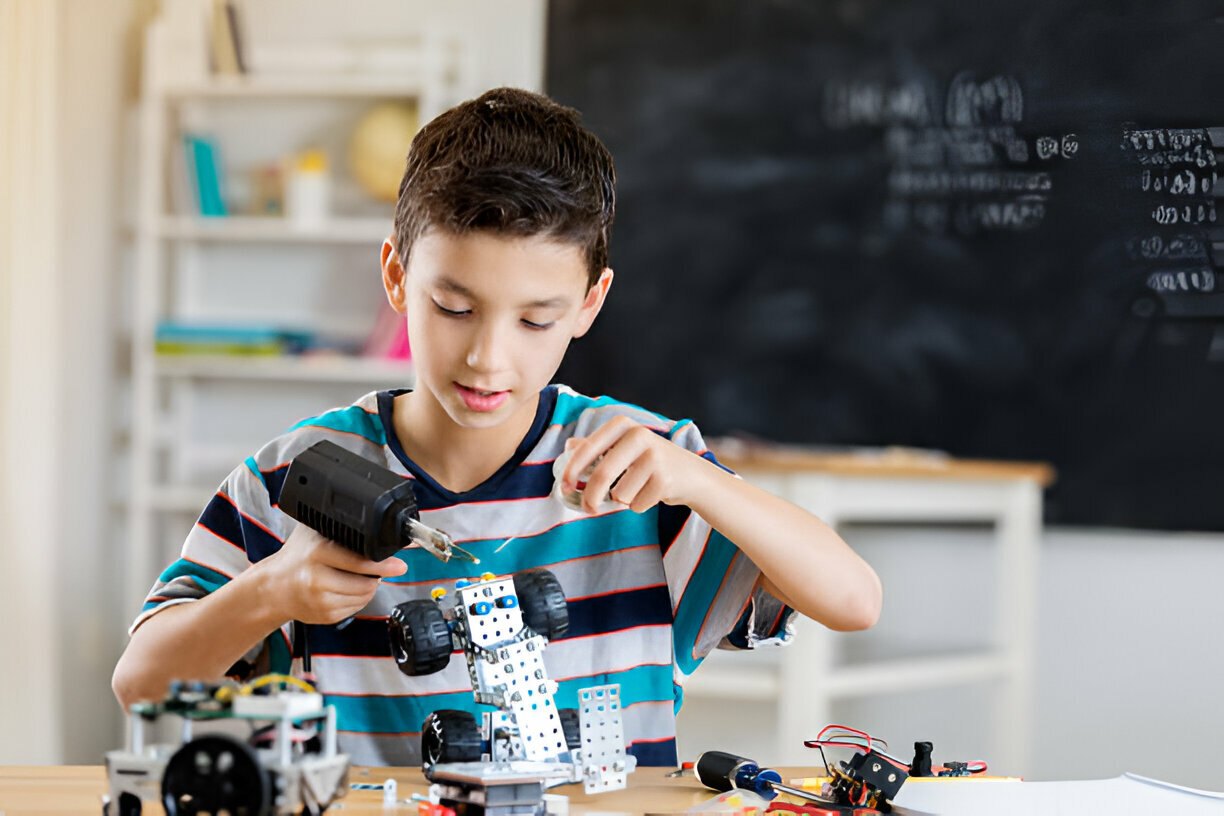
When students prepare for O-Level science, most of their attention goes to written papers. They revise notes, memorise definitions, practise structured questions, and work through past-year papers. Practical assessment is often treated as something separate, or worse, something that can be handled at the last minute. That is a mistake because practical skills test a different side of science.
A student can understand the theory and still lose marks in the practical if they are uncomfortable with apparatus, careless with readings, or unsure how to record data clearly. Practical skill is built through doing, observing, correcting, and repeating. For families searching for Best Science Tuition Singapore, practical preparation should be part of science learning, not an optional extra.
Why Practical Skills Deserve Serious Attention
The practical component tests whether a student can actually do science. That means measuring accurately, handling instruments, recording observations, planning steps, identifying variables, plotting graphs, and evaluating results. These skills are connected to theory, but they cannot be mastered by reading theory alone.
Practical work also strengthens written-paper performance. A student who has actually measured current and voltage is more likely to understand circuit graphs. A student who has plotted real experimental data is better prepared for data-based questions. Practical experience turns abstract ideas into something the student has seen and handled.
Skill 1: Reading Instruments Accurately
Many practical marks are lost before any analysis begins because students misread instruments. A measuring cylinder must be read at eye level to avoid parallax error. A ruler must be read to the correct precision. A thermometer, ammeter, voltmeter, stopwatch, or balance must be used carefully and recorded with the correct unit.
A common example is reading the meniscus of a liquid from above or below instead of at eye level. Another is recording a measurement as 5 cm when the instrument allows 5.0 cm, which may lose precision marks. These are small details, but practical assessment rewards small details. Students need hands-on practice until accurate reading feels natural.
Skill 2: Recording Observations and Data Properly
Good data recording is a skill. Tables should have clear headings, correct units, and consistent decimal places where appropriate. Observations should be specific rather than vague. Writing “the solution changed” is weaker than writing that “the blue solution turned colourless” or that “a white precipitate formed”.
Students sometimes assume presentation is less important than getting the result. In practical science, presentation is part of the result. A disorganised table makes patterns harder to see and gives the examiner less confidence in the student’s method. Clear recording also helps the student spot anomalies before moving on.
Skill 3: Plotting Graphs and Understanding What They Mean
Graph work is one of the most common sources of avoidable marks lost in science practicals. Students must choose sensible scales, label axes with units, plot points accurately, draw an appropriate best-fit line, and read values from the graph carefully. A graph that is too small, poorly scaled, or drawn by joining every point with jagged lines can lose marks even when the data is reasonable.
Interpreting the graph is just as important. Students should ask what the gradient represents, whether the relationship is direct or inverse, and whether any point looks anomalous. This connects practical work back to Physics and Chemistry theory. A graph is not only a picture of data. It is evidence that needs to be read.
Students should also practise drawing graphs by hand, not only reading printed examples. The act of choosing a scale, plotting points, and drawing a best-fit line teaches judgement in a way that looking at finished graphs cannot.
Skill 4: Spotting Anomalies and Sources of Error
A strong practical student notices when one reading does not fit the pattern and thinks about why. Was the instrument read wrongly? Was heat lost to the surroundings? Was the reaction not complete? Was the timing inconsistent? These questions show scientific judgement, and they are often tested through evaluation questions.
Students should also learn to suggest realistic improvements. Saying “repeat the experiment” is sometimes valid, but stronger answers are more specific, such as using insulation to reduce heat loss, using a data logger for more precise timing, or taking multiple readings and calculating an average. Practical evaluation rewards precise thinking.
Skill 5: Planning an Experiment
Some practical questions ask students to plan an investigation. This requires identifying the independent variable, dependent variable, and controlled variables, then outlining a sensible method. Students who only follow instructions may struggle here because planning asks them to think like a scientist rather than a note-taker.
For example, if asked to investigate how the length of a wire affects resistance, the student must decide how to vary the wire length, keep the material and thickness constant, measure current and voltage, calculate resistance, and present the results. The theory is simple, but the experimental design requires structure.
Skill 6: Linking Practical Work to Written Questions
Practical skills do not stay inside the laboratory. They appear in written papers through data-based questions, graph interpretation, experimental design, and evaluation of methods. A student who understands sources of error in practical work can write stronger answers when a written question asks why a result may be inaccurate.
This is why practical preparation should not be left until the final months. Every experiment is a chance to strengthen theory, data handling, and reasoning. A student who treats practical work seriously gains benefits across the whole science paper.
How Students Should Review After a Practical Session
The learning should not end when the experiment is over. Students should review whether their table was clear, whether the graph scale was sensible, whether any readings looked unusual, and whether the conclusion followed from the data. This reflection turns each practical into exam preparation instead of a one-off class activity.
A useful habit is to write one improvement and one possible source of error after every experiment. Over time, students become more precise in evaluation questions because they have practised thinking about real experimental limitations.
How Practical Confidence Is Built
Practical confidence comes from guided repetition. Students need to handle apparatus, make mistakes, receive correction, and try again. They need to learn how to stay calm when results do not look perfect, because real experiments rarely behave as neatly as textbook examples.
At TGC Academy, practical skills are taught alongside theory so students build confidence with apparatus, data, graphing, and experimental reasoning. This helps practical work feel like a natural part of science rather than a separate challenge that appears only near assessment time.
Frequently Asked Questions About Science Practicals
Can practical skills be learned from notes?
Only partly. Notes can explain the method, but accurate measurement, apparatus handling, graphing, and observation require actual practice.
When should students start preparing for practicals?
Throughout upper secondary. Each school experiment should be treated as preparation, not just a class activity.
What practical mistake is most common?
Careless measurement and weak data recording are very common. These include missing units, inconsistent precision, and vague observations.
Do practical skills help the written paper?
Yes. Practical work supports graph interpretation, data-based questions, and evaluation of experimental methods in written papers.
How can parents support practical preparation at home?
Parents can ask their child to explain what an experiment was testing, what was controlled, what data was collected, and what could have caused errors. This builds reflection even outside the lab.
Science practicals reward students who can observe carefully, measure accurately, organise data, and think critically about results. These skills cannot be memorised in the final week. They are built through repeated, thoughtful practice. Students who develop them gain confidence not only in the practical assessment, but also in the written questions that depend on the same experimental reasoning.
 Home
Home
Comments are closed.