

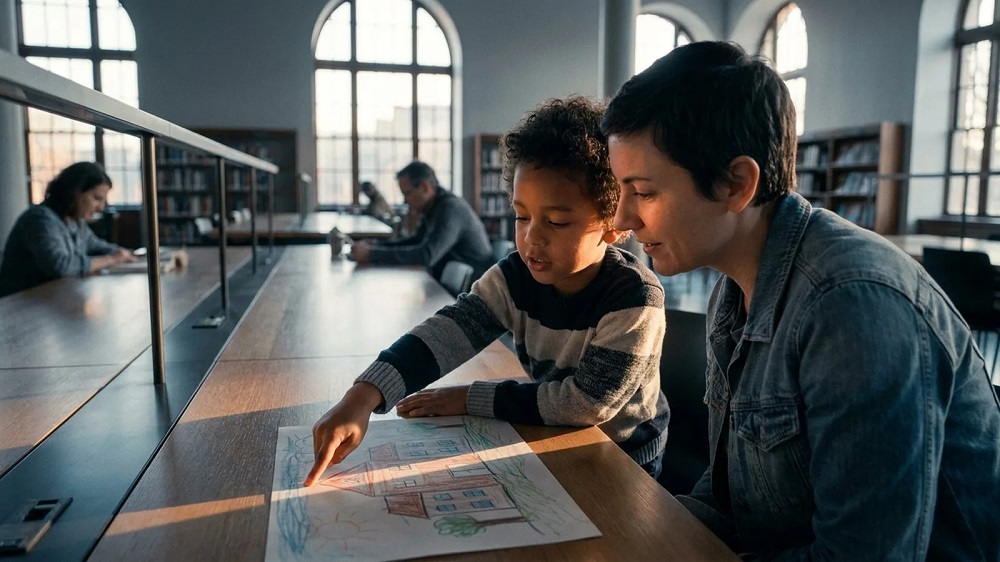
Complex challenges in academic, corporate, and social spheres rarely yield to isolated thinking. As global industries become more interconnected and technology accelerates the pace of innovation, the ability to solve multifaceted problems has become a defining skill for success. Collaborative learning, an instructional and operational approach where individuals work together in groups to solve problems, complete tasks, or create products, stands as one of the most effective strategies for cultivating advanced problem-solving capabilities.
Collaborative learning transforms the learning experience from a passive, individualistic exercise into an active, social process. By bringing diverse minds together, group learning environments mirror the real-world dynamics of modern workplaces, pushing participants to analyze issues from multiple angles, defend their reasoning, and refine their strategies collectively.
The Cognitive Foundations of Collaborative Problem-Solving
At its core, problem-solving requires more than just memorizing facts; it demands higher-order cognitive functions such as analysis, synthesis, evaluation, and adaptability. Collaborative learning enhances these cognitive processes through structured interaction and shared intellectual effort.
When an individual works alone, their problem-solving path is limited by their personal knowledge base, past experiences, and cognitive biases. Collaborative settings break through these boundaries by introducing immediate peer interaction, which stimulates cognitive growth in several distinct ways:
-
Cognitive Conflict and Resolution: When group members encounter differing viewpoints or conflicting solutions, they experience cognitive dissonance. Resolving these disagreements forces individuals to re-examine their assumptions, evaluate evidence critically, and reconstruct their mental models.
-
Externalization of Thought: Explaining a complex concept to a peer requires a person to organize their thoughts logically. This process of verbalization clarifies personal understanding and uncovers hidden gaps in logic that might go unnoticed during silent reflection.
-
Distributed Cognitive Load: Complex problems often overwhelm an individual’s working memory. In a collaborative group, the mental effort is shared across multiple minds, allowing the team to manage larger datasets and process multi-step challenges more efficiently.
Key Mechanisms That Elevate Problem-Solving Skills
Collaborative learning does not simply aggregate individual talents; it creates a synergistic environment where the collective output exceeds what any single member could produce independently. Specific group dynamics directly contribute to this enhancement.
Exposure to Diverse Perspectives
Every team member brings a unique combination of background knowledge, cultural context, and analytical habits to a problem. A approach that seems obvious to an engineer might never occur to a designer, and vice versa. Exposure to diverse problem-solving methodologies expands each participant’s mental toolkit, teaching them to approach future challenges with greater cognitive flexibility.
Active Argumentation and Reasoning
Effective collaborative learning relies heavily on structured debate. Group members must justify their proposed solutions with evidence, counter opposing arguments, and weigh alternative strategies. This continuous practice of reasoned argumentation sharpens critical thinking skills, teaching participants how to separate sound logic from weak assumptions.
Immediate Feedback and Error Correction
In solo problem-solving environments, errors often remain undetected until a final assessment or real-world failure occurs. In collaborative groups, feedback is instantaneous. Peers review steps as they are taken, spot miscalculations early, and offer alternative pathways immediately, accelerating the learning cycle.
Essential Soft Skills Developed Through Group Problem-Solving
Technical knowledge alone is insufficient for resolving complex real-world issues. Modern problem-solving requires a sophisticated blend of interpersonal capabilities, emotional intelligence, and communication skills. Collaborative learning serves as a practical laboratory for developing these essential soft skills.
-
Active Listening: To solve a problem as a team, participants must truly understand their peers’ contributions rather than simply waiting for their turn to speak. Active listening ensures that all relevant data and ideas are integrated into the final solution.
-
Negotiation and Consensus Building: Teams rarely agree on a path forward right away. Navigating disagreements requires learning how to compromise, synthesize competing ideas into a unified strategy, and build consensus without alienating group members.
-
Adaptive Communication: Group members must learn to tailor their explanations to suit peers with varying levels of familiarity with the topic. The ability to translate technical or complex ideas into clear, accessible language is a hallmark of strong leadership and effective problem-solving.
-
Shared Accountability: Collaborative projects shift the focus from individual achievement to team outcomes. Working toward a shared goal fosters mutual responsibility, encouraging participants to support struggling teammates and take collective ownership of mistakes and victories alike.
Implementing Collaborative Learning for Maximum Impact
While the benefits of collaborative learning are vast, simply placing people into groups does not guarantee improved problem-solving results. Unstructured group work can lead to free-riding, dominant personalities overpowering quieter members, or off-topic discussions. To maximize learning outcomes, collaborative experiences must be designed with intention.
Structuring Interdependence
Effective collaborative tasks require positive interdependence, meaning that the team can succeed only if every individual succeeds. Assigning specific, complementary roles within a group, such as researcher, facilitator, synthesizer, or skeptic, ensures that every participant has a distinct purpose and contributes meaningfully to the final output.
Designing Open-Ended, Complex Tasks
If a problem has a single obvious answer or can be easily solved by one smart individual, group work becomes unnecessary and inefficient. Collaborative learning thrives on open-ended, authentic problems that admit multiple valid approaches and require interdisciplinary thinking.
Emphasizing Reflection and Metacognition
True growth occurs when groups reflect on their problem-solving process after completing a task. Educators and team leaders should prompt groups to analyze not just what solution they reached, but how they arrived at it, how they handled internal friction, and what they would do differently next time.
Frequently Asked Questions
How does collaborative learning benefit high-achieving individuals who prefer working alone?
High-achieving individuals benefit significantly from collaborative learning by taking on instructional roles. Explaining complex ideas to peers deepens their own mastery of the material, highlights subtle gaps in their knowledge, and develops critical leadership, coaching, and communication skills that cannot be built through solo study.
What is the difference between cooperative learning and collaborative learning?
Cooperative learning typically involves dividing a task into smaller parts, where each individual completes their assigned portion independently before stitching the final product together. Collaborative learning requires participants to work together simultaneously on the core problem-solving process, engaging in continuous joint dialogue and shared creation throughout the task.
How can instructors prevent one dominant student from taking over a group problem-solving task?
Instructors can prevent dominant behavior by assigning specific group roles, utilizing structured discussion protocols like round-robin sharing, and evaluating both individual contributions and group processes. Establishing clear norms around active listening and equal participation before group work begins also mitigates this issue.
Does collaborative learning work effectively in online or remote environments?
Yes, collaborative learning can be highly effective online when supported by appropriate digital tools such as breakout rooms, interactive whiteboards, and real-time document editing. Successful remote collaboration requires clear guidelines, structured task definitions, and proactive facilitation to maintain high levels of engagement.
How do educators fairly assess individual learning in a group problem-solving project?
Fair assessment combines group-level evaluations with individual accountability measures. Teachers can utilize individual reflection logs, peer evaluations, brief oral defenses, and targeted quizzes alongside the final group submission to ensure every student’s comprehension and contribution are accurately measured.
Can collaborative learning be counterproductive if a group reaches a incorrect consensus?
Known as groupthink, reaching a flawed consensus can occur if groups prioritize harmony over critical evaluation. To prevent groupthink, instructors should assign a specific devil’s advocate role within groups, encourage systematic testing of assumptions, and introduce external feedback checkpoints during the problem-solving process.
What age group benefits most from collaborative problem-solving strategies?
Collaborative problem-solving benefits learners of all ages, from early elementary students to executive-level adults. While young children focus on basic social skills and simple cooperative tasks, older learners tackle complex, multifaceted challenges, proving that the underlying cognitive benefits adapt seamlessly across all developmental stages.
 Home
Home
Comments are closed.